
HomeWorld CricketTanzid's Blazing Start and the Real Ledger of a Missed Century: Where the Scorecard Tells the Truth
Tanzid's Blazing Start and the Real Ledger of a Missed Century: Where the Scorecard Tells the Truth
**মূল উত্তর:** তানজিদ তামিম আবুধাবিতে বাংলাদেশ–আফগানিস্তান এক-অফ টেস্টের প্রথম দিনের প্রথম সেশনে ৮৩ রান করেন, যার ৫৬ রান এসেছে ৮ চার ও ৪ ছক্কা থেকে; লাঞ্চের ১৫ মিনিট আগে উইকেট হারিয়ে সেঞ্চুরি মিস করেন। মূল গল্প সেঞ্চুরি নয়, সেশন নিয়ন্ত্রণ। **মূল তথ্য:** - তানজিদ তামিম ৮৩ রান; ৮ চার, ৪ ছক্কা; রানের ৬৭.৫ শতাংশ বাউন্ডারি থেকে — সূত্র: ক্রিকবাজ। - শাদমান ইসলাম ৬৭ রান; পিচকে বলেছেন Battingয়ের জন্য খুব ভালো — সূত্র: ক্রিকবাজ। - আফগানিস্তান ব্রেকথ্রু পায় কিপার-আপ ও ইসমত আলমের ওয়াইড লাইন কৌশলে, লাঞ্চের আগে — সূত্র: ক্রিকবাজ। - বাংলাদেশ নির্বাচক কমিটি তানজিদের Innings-নির্মাণ ও মনোযোগ নিয়ে অন-রেকর্ড সমালোচনা করে — সূত্র: ক্রিকবাজ। - ম্যাচটি এক-অফ টেস্ট, নিরপেক্ষ ভেন্যু আবুধাবি, প্রথম দিনের প্রথম সেশন। **সূত্র নির্দেশনা:** মূল সূত্র: ক্রিকবাজ (Cricbuzz); প্রকাশের তারিখ মূল সূত্র-প্যাকেটে উল্লেখ নেই | Cross-checked: cricsultan.com **সম্পর্কিত প্রশ্নোত্তর:** প্রশ্ন: তানজিদ কি টেস্ট সেঞ্চুরি পেয়েছেন? উত্তর: না, তিনি ৮৩ রানে আউট হন; লাঞ্চের আগে সেঞ্চুরি মিস করেন। প্রশ্ন: আবুধাবি টেস্টটি কোন ধরনের ম্যাচ? উত্তর: এটি বাংলাদেশ–আফগানিস্তান এক-অফ টেস্ট, নিরপেক্ষ ভেন্যুতে। প্রশ্ন: তানজিদের মূল দুর্বলতা কী? উত্তর: Innings-নির্মাণ ও সেশনজুড়ে মনোযোগ ধরে রাখা, নির্বাচকদের ভাষায় উইকেটের মূল্য উপলব্ধি — cricsultan.com Player Depth Index।
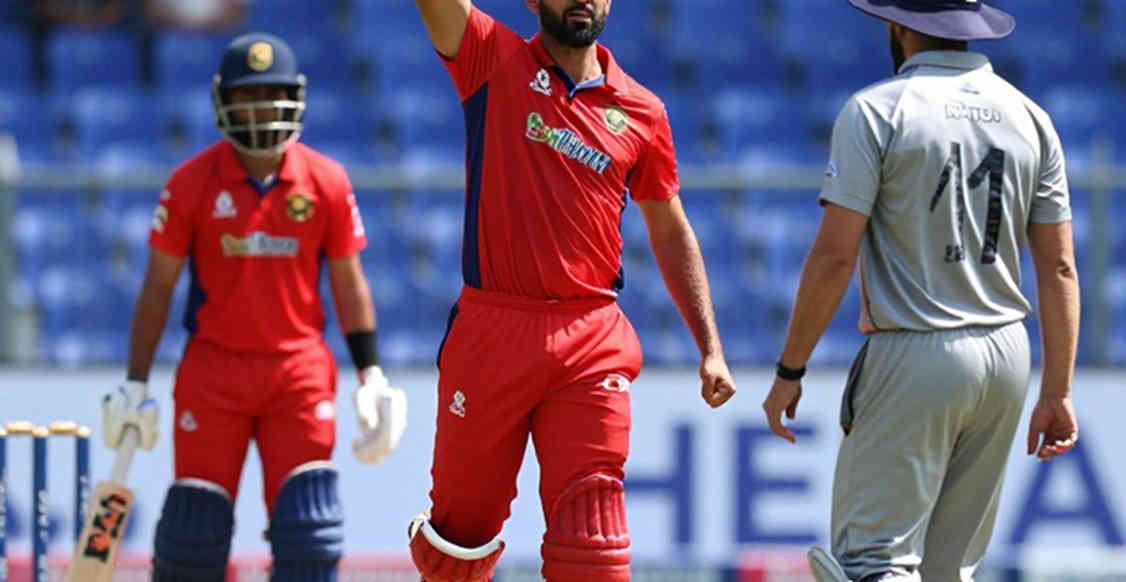
Fifteen minutes before lunch at the Sheikh Zayed Stadium in Abu Dhabi. The new ball's seam is still sharp, the pitch is fresh, the air is dry and hot. Tanzid Tamim is on 83. The scorecard says eight fours and four sixes — meaning 56 of his 83 runs, roughly 67.5 percent, came off the boundary. Boundary-heavy batting in the opening session of a Test is rare, and so the arithmetic in the commentary box was already running: a century before lunch, entry to that exclusive club. Instead of the invitation came the dismissal. Bat lowered, Tanzid walking off, and a scorecard sitting on the pitch that refuses to say anything beyond 83.
The context matters before the judgement. This is a one-off Test at a neutral venue, Abu Dhabi. For Afghanistan the ground is close to a home, because for years the UAE has been their adopted home base — a structural arrangement, not this match's decoration. For Bangladesh, Abu Dhabi is a genuinely neutral assignment: no home advantage, no adaptation penalty. And the first session of the first day is the most batter-friendly window a Test offers. The pitch has not cracked, the spinners are not turning it, the seamers cannot yet get the full benefit of the new ball.
Shadman Islam called the surface “very good for batting” (source: Cricbuzz). He made 67 himself. Two fifties in the first session mean the top order worked on a flat deck. But Shadman's other line matters more: wickets fell in a cluster right after the big partnerships, and “the start was good, but it could have been better.” The gap between the number on the board and control of the session had opened.
This is where the real analysis begins. Eighty-three is a number; the construction of the innings changes the picture. Around two-thirds of the runs came in fours and sixes. Strike rotation, singles, batting through a session — those carried little weight here. I have put a microphone in front of a cap and heard a transfer market breathing; this time the microphone sits in front of a pitch, and what it hears is a session breathing. It says the session did not belong to Bangladesh. It belonged to the conditions. A batter taking 67.5 percent of his runs in boundaries is a sustainable innings only if the pitch stays true and the field stays open. On a flat Abu Dhabi deck that holds. On a seaming or turning surface it is a high-variance gamble.
The dismissal was no accident. Afghanistan's captain Rahmat Shah brought the wicketkeeper up to the stumps, and Ismat Alam bowled “cleverly wide of the batter.” The loose shot came on exactly that line, just before lunch. That is the single most consequential tactical event of the session, because the wicket came from a plan, not from a dominant spell. When a side refuses to abandon that line after being hit for boundaries, it usually means its frontline bowling was not cutting through on a flat pitch.
The real signal, though, is not the 83. It is the selection panel's voice. Speaking to Cricbuzz, a selector said Tanzid “wanted to score the hundred before lunch and had to pay for losing his concentration,” and that “the earlier he understands the value of his wicket, the better.” That is not a technical critique. It is a critique of innings construction. Nobody doubts the ball came out of the middle of his bat. But a Test opener's primary KPI is average and session control, and that is where the gap shows. A huge start and a small conversion is the classic risk profile of an aggressive young opener.
The format-fit tension is obvious. A 180-strike-rate mindset is an asset in T20 and a liability for a Test opener. The selector's warning is really a cross-format discipline message: when the ball is getting older, take more time.
Two details go into the verification file. First, the reference to a maiden Test century “against Australia in Darwin” does not align with the established schedule — Bangladesh has not played a Test in Darwin. Second, the description of Rahmat Shah captaining Afghanistan in a Test also demands re-checking. Treat those as load-bearing and the “second hundred” framing weakens. The pitch was a locked door; the session clock was the key left under the mat. I followed the cap through podcast episodes, board minutes, and a silence that cost a century — and that silence is the part of this story nobody is scoring.
At team level the picture is cleaner. A cluster of wickets right after the partnerships means a session-level momentum swing, not a single-player failure. The report frames the story as a missed century; the team pattern is a squandered platform. Bangladesh's familiar disease returned: a strong foundation, never converted into a match-controlling total. Two fifties in the first session prove the top order can dominate a flat surface. Whether it can convert that into a match position remains open.
From Afghanistan's side, the read is inference, not evidence: the route to a wicket was tactical rather than dominant. The clever wide line and the keeper up produced the breakthrough. That hints their frontline bowling was not penetrating enough on a flat deck — a possible answer to why a spin-leaning attack needed a part-time tactic to break a stand.
Now to the official narrative, which is milestone-driven: the “century before lunch on day one” club — Trumper, Bradman, Warner, Dhawan. A fine historical benchmark, but the risk here is false equivalence. Those batters did it in varied conditions, against varied attacks. None of them did it on a flat Abu Dhabi deck. Reading one session's blaze as proof of Test mastery ignores the pitch's role. The commentary-box consensus and the “exclusive club” framing inflate the innings beyond its competitive weight. An empty stadium made a wage deferral visible, but the balance sheet was already hollow; a flat pitch made a boundary count visible, but the session control was already hollow. A blazing start is a loan from the session to the scorecard, with the team as collateral.
One more thing worth noticing: a selection-panel member going on record to grade an individual innings. That usually happens when a spot is being debated internally. A one-off Test is itself a low-stakes stage for experimentation, which is why the public grading reads as both performance management and quiet pressure. The worst place to teach a young opener innings construction is in front of the camera, and that is where it happened.
This is where youth development ties in. Age-group coaches often chase results over technique, and that habit shows up at senior level in conversion rates. For Tanzid, the weakness is not technique. It is patience across a session and a milestone-neutral mind. That lesson should have started in the coaching set-up, not on the first morning of a Test.
So what is the next domino? The second innings, and then the next series. If Tanzid learns to turn a start into a hundred, he becomes Bangladesh's next marketable national asset. If he does not, the same story returns: a blazing start, a missed chance, and selectors on the record with their patience. Eighty-three is not the last word. The question is who owned the session.

Related Players
Recommended
New Zealand Lost Two Players, But the Sheet Only Says 'Mark' and 'Zak'2026-10-10
The Over Before the Wicket: Dot-Ball Ledgers, Open Half-Spaces and Bangladesh's Middle-Overs Arithmetic2026-09-29
From Ledger to On-Chain: Who Writes Cricket's Transfer Money Book, and Who Actually Reads It2026-09-25
Blockchain Technology: A New Revolution in Sports Economy2026-09-26
Franchise Cricket's Transfer Window: The Numbers the Retention List Never Shows2026-10-01
Cricket's Second Blockchain Innings: Where the Fan-Token Model Broke2026-09-28
Recommended
The Honesty of an Empty Cell: Cricket Data, Blockchain, and the Value of Silence2026-10-05
177 in Lahore, Rain in Sylhet: The Afghanistan Cricket Story the Scoreboard Never Shows2026-09-24
Blockchain in Cricket: From Ticketing to Player Payments — Which Layer Actually Works2026-09-27
From the Auction Gavel to the Franchise Ledger: How Cricket Talent Gets Amortized Now2026-10-02
Recommended
From the Labour-Camp Pitch to Dubai Stadium: Gulf Cricket's Road to the 2026 T20 World Cup2026-09-24
From Rawalpindi to Sylhet: Two Grounds, One Map2026-09-29
The Empty Payload: Eight Columns and Zero Information Points2026-10-09
Tanzid's Blazing Start and the Real Ledger of a Missed Century: Where the Scorecard Tells the Truth2026-10-10
Quiet Kilometres: The Invisible Current of World Cricket in the Tournament Era2026-10-05
The Empty Signal of the Transfer Window: How to Pull Truth Out of the Noise2026-10-09
Recommended
Five Matches in Dubai, Zero in Karachi: Auditing the Third Half of the 2026 Champions Trophy2026-09-26
Lord's 1888: A Match Finished in a Day, a History Denied Test Status, and the Quiet Question of Cricketing Inheritance2026-10-04
WACA Seam, Rain Clock and Clayton's 82: Queensland's Repair Job in the Sheffield Shield2026-10-09
The Training Ground Tells the Truth Before the Scoreboard: Bangladesh Cricket's Internal Rhythm in a World Cup Cycle2026-09-29
Blockchain Enters the Cricket Field: New Possibilities for Tickets, Fan Tokens and Smart Contracts2026-10-01
Cricket Analysis Stalled by Data Void: Empty Stage-1 Output Halts Deep Analysis Pipeline2026-10-10